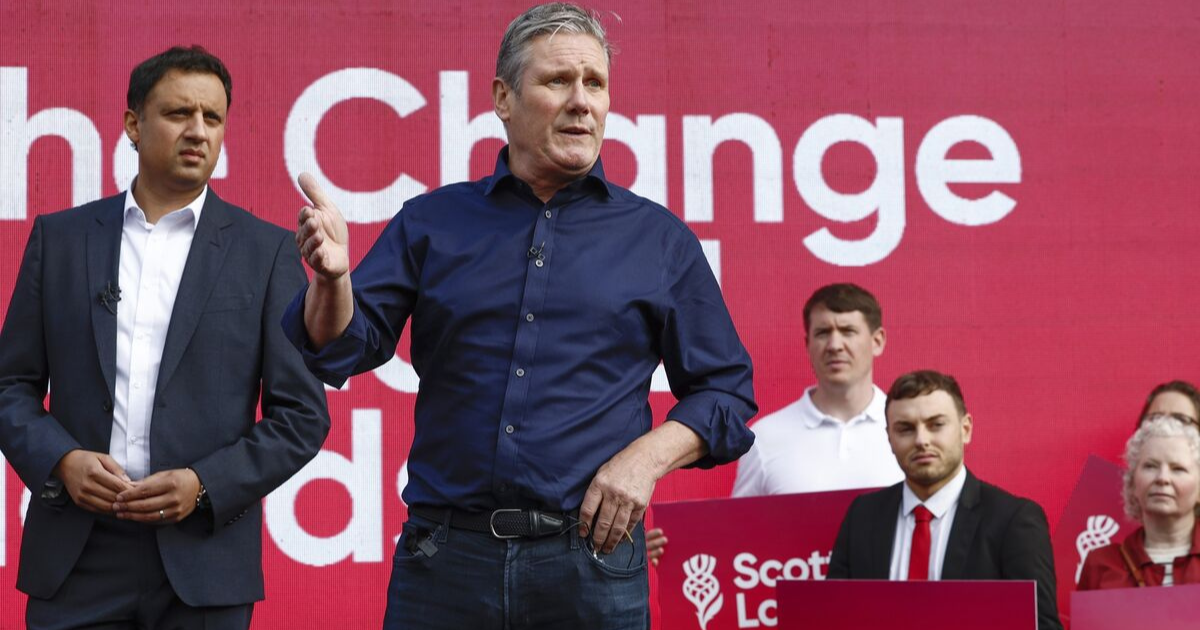
Over the summer, Keir Starmer’s Labour Party shared a clear idea for what they want to do if they win the government: they think things will stay bad, nothing will improve, and being hopeful is pointless. They also made it clear that people who are wealthy or powerful shouldn’t worry about losing any of their money or influence.
Even though most voters want the government to increase taxes on rich people, the shadow chancellor Rachel Reeves said she wouldn’t do that last month. And even though 63% of British people believe that taxes for wealthy individuals are too low, Starmer has stated that he doesn’t want to raise income tax for the highest earners. He says his main goal is to lower taxes instead. Only a small percentage of people think that rich people pay too much tax.
Labour’s Policy Shifts: Scrapping Popular Plans and Financial Discipline
Meanwhile, Labour’s promise to spend £28 billion every year on a Green New Deal, which aims to speed up the shift to a carbon-free economy, has been called off by Reeves. Instead, she mentioned that it would take more time to reach that amount, highlighting the importance of being careful with spending. This policy is widely supported by voters, especially in crucial areas like the North and Midlands of England.
Media Perception and Political Strategy: Labour’s Balancing Act
Additionally, Labour has abandoned other well-liked plans, such as taking over the energy industry and increasing taxes on big tech companies like Facebook and Google. They have also dropped promises to replace Universal Credit and remove the cap on benefits for families with more than two children.
Some parts of the media, including those who support the Conservative Party and followers of the ideas of former Prime Minister Tony Blair, view these changes positively. They think it’s smart for Labour to adopt similar policies to the Tories because then it’s hard for Rishi Sunak, the Chancellor of the Exchequer, to criticize them. In a way, though not exactly as they mean it, they might be correct.
In Britain, there is a huge concentration of wealth and political power. Historically, Labour has only won elections when it has made it clear that it won’t challenge the existing elite.
As we saw during Jeremy Corbyn’s leadership, the media, financial institutions, and even army leaders won’t accept any suggestion that the Labour Party plans to govern according to the wishes of the majority of voters who want a fairer society.
Potential Electoral Outcomes: Speculating on Party Strategies and Public Sentiment
During a general election, the influence of the UK’s established institutions is so strong that it can outweigh what voters actually want in terms of policies. Implementing policies like taxing the wealthy, bringing back key services under public ownership, and addressing climate change would require challenging powerful institutions that could potentially defeat you. This is essentially what many Labour strategists have come to believe, even if they wouldn’t phrase it that way.
You could disagree with that. The influence of established institutions may be weakening. Maybe the Conservative Party would still lose the next election if Keir Starmer continued to campaign with left-wing policies.
On the other hand, there’s a chance that because the Labour leader is seen as someone who breaks promises – getting elected based on one set of pledges and then not following through – it could allow the Tories to criticize him successfully. However, it’s more probable that this will make his first term as prime minister very challenging and will leave many people feeling angry, which the right wing might take advantage of.
Charting the Future: Dynamics of British Politics
navigating the complex landscape of British politics involves considering the interplay between voter preferences, establishment institutions, and leadership integrity. While the influence of traditional power structures may still hold sway, there are indications of shifting dynamics that could reshape electoral outcomes. The actions and credibility of political leaders, such as Keir Starmer, play a pivotal role in shaping public perceptions and party strategies. Ultimately, the path forward for Labour and its rivals hinges on effectively addressing the evolving concerns of voters while navigating the challenges posed by entrenched interests.